Skip to content

Vibration measurements on buildings - Structural vibrations
Building dynamics measurements & monitoring

Structural Dynamics Vibration Measurement System

Vibration measurements on buildings - Structural vibrations - Building dynamics measurements & monitoring

Modal hammer – accelerometer Sensor DAQ
NVH-IMP software for FRF measurement

Application areas include scientific research, industrial monitoring, and construction.

The modal hammer is connected to the first channel, and the accelerometer to the second channel, enabling structural investigations, for example, of bridge or building structures.

The measurement is performed using the NVH-IMP software, which is pre-configured for impact hammer test measurements with an FRF transfer function.

The sensor sensitivity of the modal hammer in N and the sensitivity of the accelerometer in m/s² are entered into the software before the test. The size of the sensors can vary depending on the object’s size and mass.

All important measurement results are displayed by the software. Double impacts are immediately visible.

Impact Hammer Test Measurement

The video presentation shows a measurement with a roving hammer, which is then used to transfer the transfer spectra to a grid model structure for animation.

The NVH-IMP impulse hammer test software is the solution for generating vibrations in a structure using an impulse hammer.

This is used to measure transfer functions and the natural vibration of a structure.

Once the modal hammer measurement is complete, the transfer functions can be compared with each other.

The NVH-ODS software enables the FRF spectra to be assigned to a structural grid model for animation of the structure.

High Sensitivity Vibration Sensor - Seismic Accelerometer Set

3D SEISMOMETER

A unique and very convenient feature of the 902xxx series seismometers is their ICP sensor interface. This allows the sensors to be directly used with any measurement device having an ICP input (4 mA @ 24 V): no additional power supply is necessary. 

The ICP power supply and the requirements of DIN 45669 determine the frequency response of the seismometer. The dynamic range is extremely wide (> 130 dB). 

Thus, seismometers have a dynamic range 30 dB wider than that of high-quality MEMS sensors. Vibration velocities in the range from 0.1 μm/s up to 3 m/s can be measured. The sensitivity of 30 V/m/S is absolutely sufficient for modern measurement devices with high quality 24-bit analog-to-digital converters. After its internal end-of-line test, each seismometer is tested and calibrated by our cooperation partner SPEKTRA Schwingungstechnik and Akustik Dresden GmbH in their role as DKD / DAkkS accredited testing institutes. 

The DAkkS calibration certificate is provided within the scope of delivery.

Seismometer Geophone

TRIAXIAL ACCELEROMETER

  • Triaxial ICP® accel.
  • 30V/m/s
  • IP68
  • 1 Hz – 315 Hz
  • Dynamic range <130 dB

Triaxial Seismic Accelerometer

triaxial low frequency accelerometer

KS48C-3 + 729 Tripod floor plate Set

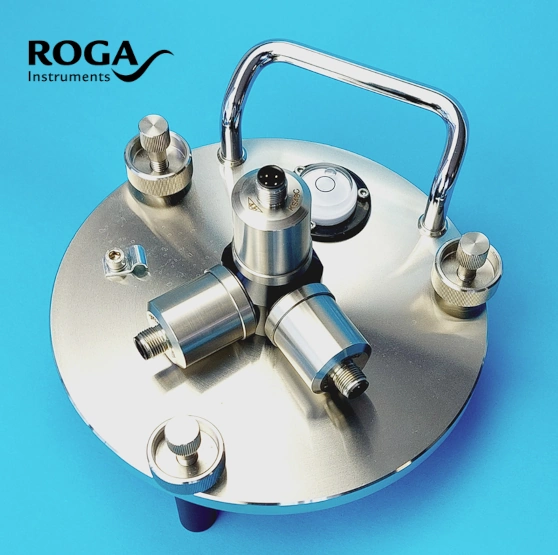
The triaxial seismic accelerometer set is designed for measuring low-frequency vibrations. Its high sensitivity makes it ideal for a wide range of applications. 
 
The highly sensitive accelerometer has a measuring range of 6g and can therefore detect even the smallest vibrations. 

KS48C Specifications

  • High Sensitivity Accelerometer
  • Suitable for seismic measurements and structural investigations at low frequencies
  • Highly sensitive sensor system without internal amplification thus excellent resolution and lowest noise
  • Particularly good sensitivity/ mass ratio
  • IEPE voltage output
  • Frequency response 0.07 Hz – 4000 Hz (-3dB)
  • Sensitivity 1000 mV/g
  • Residual noise wide band; <14 µg RMS (0,5 – 10000 Hz)
  • Mass 165 grams
  • Measuring range ± 6 g
  • Robust design with M12 connector
  • Protection grade IP67 

KB12VD/01 + 729 Tripod floor plate Set
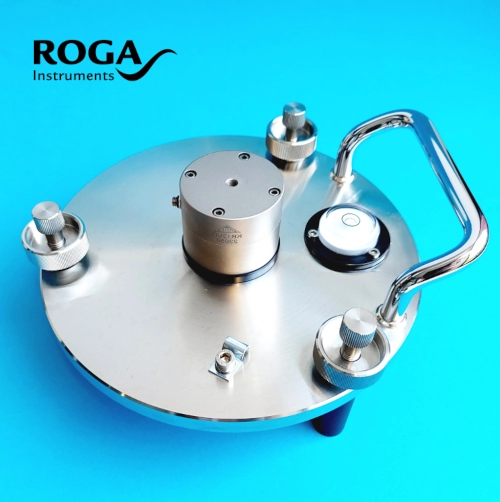
High Sensitivity Vibration Sensor Seismic Accelerometer

The seismic accelerometer set is designed to measure low-frequency vibrations. Its high sensitivity makes it ideal for a wide range of applications. 

The highly sensitive accelerometer has a measuring range of 10 V/g, allowing it to detect even the smallest vibrations. 

KB12VD Specifications

  • High Sensitivity Accelerometer
  • Suitable for seismic measurements and structural investigations at low frequencies
  • Highly sensitive sensor system without internal amplification thus excellent resolution and lowest noise
  • Particularly good sensitivity/ mass ratio
  • Air-damped resonance and overload protection by friction coupling
  • IEPE voltage output
  • Frequency response 0.05 Hz – 260 Hz
  • Sensitivity 10 000 mV/g
  • Mass 150 grams
  • Measuring range ± 0.6 g

RogaDAQ2 AC/DC Coupling Setting

The RogaDAQ2 USB DAQ is designed for the acquisition of DC voltages and, in conjunction with IEPE vibration sensors, for the precise measurement of extremely low frequencies from 0.3 Hz.

Two analog inputs can be controlled independently to switch the IEPE supply on or off. This feature allows users to connect different sensors to the appropriate channels for specific applications. 

For instance, an IEPE seismic accelerometer with a sensitivity of 10 volts per g can be connected to channel 1, while a DC-coupled magnetic field sensor can be connected to channel 2. This allows users to determine the optimal configuration for an MRI system.

Vibration monitoring based on artificial intelligence, from rail vehicles
Ready for immediate use
condition monitoring

Our VibeAI starter kit offers a quick and cost-effective introduction to the world of condition-based maintenance (condition monitoring).

With plug-and-play hardware and intuitive software, you can record and analyze machine conditions and detect anomalies at an early stage.

VC and Nano Criteria System

This System is used for vibration measurements on very sensitive equipment, e.g. electron microscopes, photo-lithography equipment or microelectronics and nanotechnology equipment.

In order to standardize the installation and operating conditions of these systems, so called VC limits (Vibration Criteria) were developed in the 1980s. There are the levels VC-A to VC-G

The instrument measures the third-octave spectrum of vibration velocity with three channels. This allows measurement in three orthogonal directions (X/Y/Z) or at three different positions simultaneously